
It sounds like a simple question, but the answer is more nuanced than most people expect. If you’ve ever felt guilty reaching for the blow dryer, or noticed your hair looking limp and undefined after air drying all day, you’re not the only one.
The blow dry vs air dry debate is one of the most common things clients bring up in the salon chair, and the honest answer is that neither method is universally better. What matters is how you do it, and what your hair type actually needs. Ask ten stylists the blow dry vs air dry question and you’ll get nuanced answers, not a simple one, because the right choice genuinely varies from person to person.
This guide breaks down the science, the practical differences, and what actually works best for hair in a hot, humid climate like Cebu or Iloilo.
What Actually Happens to Your Hair When It’s Wet
Before comparing methods, it helps to understand why wet hair is so vulnerable, and why that context matters when thinking about the blow dry vs air dry decision. When hair is saturated with water, the shaft swells and the cuticle, the outer protective layer, lifts and softens. In this state, hair is significantly more elastic and more prone to breakage from friction, pulling, or prolonged tension.
This is why leaving hair wet for too long isn’t as “safe” as it sounds, and why the blow dry vs air dry question isn’t really about heat versus no heat. It’s about which method gets your hair from wet to dry in the least damaging way for your specific hair type.
The Case for Blow Drying
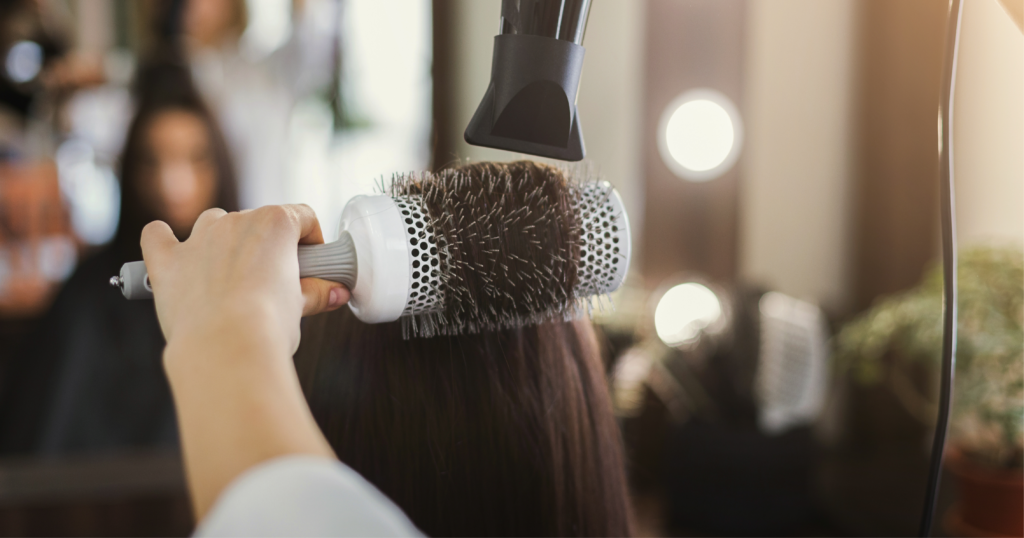
Blow drying gets a bad reputation mostly because of how it’s done incorrectly, without heat protection, too close to the scalp, at maximum heat for too long. But in the blow dry vs air dry conversation, blow drying done properly has real advantages:
It shortens the window of vulnerability. The faster hair dries, the less time the swollen, weakened shaft is exposed to friction and manipulation. For fine or fragile hair types, this can actually reduce breakage compared to hours of air drying.
It seals the cuticle. A blow dryer used correctly, with a nozzle attachment and a cool shot at the end, smooths and seals the hair cuticle, which improves shine and reduces frizz, especially important in humid climates.
It gives you control. You can direct volume, shape, and texture during the drying process in a way air drying simply can’t replicate.
The key qualifiers: heat protectant is non-negotiable, keep the dryer at least 15 cm away from the hair, use medium rather than maximum heat, and always finish with a cool blast to close the cuticle.
The Case for Air Drying
Air drying avoids direct heat exposure, which is a genuine benefit, particularly for hair that’s already chemically treated, bleached, or fragile. But it’s not without its own risks:
Prolonged swelling causes hygral fatigue. When hair stays wet for extended periods, repeated swelling and contracting of the hair shaft over time weakens the internal structure. This is especially relevant for fine or low-porosity hair.
In humid climates, air drying can take hours. In Cebu or Iloilo, where humidity is high most of the year, hair that’s air drying may stay damp for far longer than it would in a cooler, drier climate, which means a longer window of vulnerability.
Frizz is harder to control. Without heat to seal the cuticle, hair drying in humid air is far more likely to frizz and lose definition as it dries.
Blow Dry vs Air Dry: What’s Actually Better for Your Hair Type?
The truthful answer is: it depends on your hair type and how you do it. Here’s a general guide:
| Hair Type | Better Method |
| Fine or low-porosity | Blow dry on low-medium heat with protectant |
| Thick or coarse | Either works; blow dry for faster results |
| Chemically bleached | Air dry when possible; blow dry on low heat only |
| Rebonded or keratin-treated | Blow dry to maintain smoothness; avoid air drying flat |
| Wavy or curly | Air dry to preserve curl pattern; diffuse if needed |
| Color-treated | Air dry preferred; blow dry on cool or low setting |
The bottom line is that blow drying done correctly is not inherently more damaging than air drying, and for many hair types in a humid climate like Cebu or Iloilo, it’s actually the smarter choice.
How to Blow Dry Your Hair Without Causing Damage
If you’re going to use a blow dryer, here’s what makes the difference:
- Always apply heat protectant first, evenly distributed through damp hair before you start
- Rough dry first with a towel or your hands until hair is about 70% dry before using the dryer
- Keep the dryer moving rather than holding it in one spot
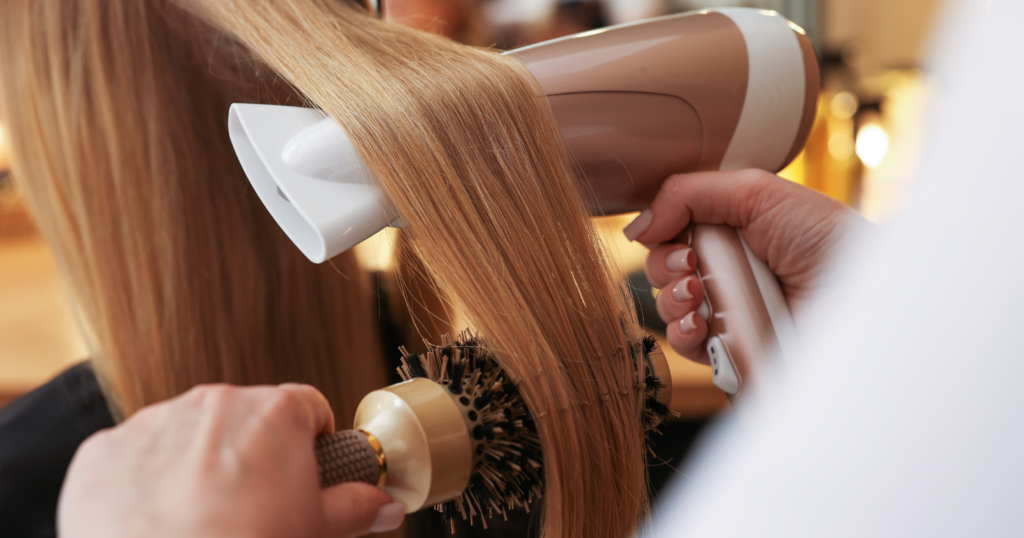
- Use the nozzle attachment to direct airflow down the hair shaft, not against it
- Finish on cool to close the cuticle and lock in smoothness
- Don’t brush aggressively while wet, use a wide-tooth comb or a detangling brush designed for wet hair
What Works Best in Cebu and Iloilo’s Climate
When it comes to blow dry vs air dry in tropical climates with consistent heat and humidity, air drying often leads to frizz, flatness, or hair that dries unevenly depending on where you are in the city. For most people managing their hair in Cebu or Iloilo, a combination approach tends to work best: let hair rough dry naturally for 10 to 15 minutes to release excess water, then use a blow dryer on medium heat with a protectant to finish, which minimizes heat exposure while avoiding the prolonged damp window that causes hygral fatigue and frizz.
For those who’ve had keratin or rebonding treatments, blow drying with a paddle brush or nozzle attachment also helps maintain the smoothness of those services between salon visits.
When to See a Professional
If your hair consistently looks frizzy, flat, or undefined regardless of how you dry it, the issue might be less about your drying method and more about the underlying condition of your hair. Heat damage, chemical over-processing, and lack of moisture can all make both blow drying and air drying produce frustrating results. A proper salon assessment can identify what your hair actually needs, whether that’s a deep conditioning treatment, a protein reset, or a service like keratin to give you a better baseline to work with.
Elysian Salon’s teams in Cebu City (V. Rama Avenue), Mandaue City (Chatswood Center, A.S. Fortuna), and Iloilo City (Plazuela Dos, Mandurriao) offer hair health consultations alongside our full treatment menu. If your hair isn’t behaving the way you’d like, that’s usually where we start: figuring out what it actually needs before recommending anything else.
Book a consultation with Elysian Salon and let’s take a proper look.
Frequently Asked Questions
Is it better to blow dry or air dry your hair?
Neither is universally better, and the blow dry vs air dry answer genuinely depends on your hair type and how each method is applied. Blow drying done correctly with heat protectant and proper technique can actually be less damaging than extended air drying for fine or fragile hair. Air drying is preferable for heavily bleached or chemically processed hair, but prolonged dampness has its own risks, particularly in humid climates where drying time is much longer.
Does blow drying cause more damage than air drying?
Blow drying causes damage primarily when done incorrectly: too much heat, too close to the hair, without protectant. Research has shown that hair left wet for too long can also suffer structural weakening from within due to repeated swelling. The safest approach is a combination: air dry partially, then finish with a blow dryer on medium heat with a protectant applied.
How often should you blow dry your hair?
Daily blow drying on high heat without protectant will cause damage over time. If you’re blow drying frequently, use medium heat, always apply a heat protectant, and incorporate deep conditioning treatments weekly to maintain moisture and elasticity. Most stylists recommend limiting high-heat blow drying to 3 to 4 times per week at most for everyday hair health.
What is the healthiest way to dry your hair?
The healthiest approach for most hair types is to gently squeeze out excess water with a microfiber towel (never rub), allow hair to rough dry for 10 to 15 minutes naturally, then finish with a blow dryer on medium heat using a heat protectant. This limits both the prolonged dampness of full air drying and the concentrated heat exposure of blow drying wet hair from scratch.